

Who this is for
Adults post-stroke or post-TIA, medically stable, discharged to home (or in outpatient rehab). Acute or subacute hospitalized members are not yet eligible - the pathway picks up at discharge readiness. Members with active aphasia or severe cognitive deficit are paired with a Peer Navigator and family member from day one.
What brings people here
Post-stroke / post-TIA referral (within 12 months of event); high stroke-risk profile from FMA (AFib, uncontrolled BP, prior TIA, carotid disease); PCP or neurology referral.
Clinical framework
American Heart Association - Center for Health Technology & Innovation.
How the 8 weeks run
Baseline assessments, your first SMART goal, and the 1:1 that sets up everything after it.
Specialist coaches rotate in, and sessions come thickest here. One change at a time, in the domains your baseline flagged.
Re-score, refresh the care plan, and check in 1:1 on what is and is not working.
The remaining domains, at a lighter cadence, and the work of making the early weeks hold under pressure.
Final re-score, relapse prevention, and the plan for what happens next.
When your sessions fall
The program is built in four-week modules. Sessions come thickest at the start, when what you decide matters most, and step down as things settle. That is 5 sessions of 45 minutes across 8 weeks, counting the visit before week 1.
| Module | Weeks | Sessions | Cadence |
|---|---|---|---|
| Module 1 | Weeks 1 to 4 | 2 | every other week |
| Module 2 | Weeks 5 to 8 | 2 | every other week |
Week by week
- Before you beginBefore you begin
This is the reading before your first visit. This pathway picks up after a stroke or a transient ischemic attack, once you are home or in outpatient rehabilitation. It runs alongside your neurologist, your primary care doctor and any therapy you are already having. It does not replace them.
- Week 1Preventing the second stroke
Recovery is the part you feel. Secondary prevention is the part you do not feel, and it is where the largest effects in this pathway live. This week is about the four levers with the strongest evidence behind them.
- Week 2Moving again, and how much
This week you meet Tonia Burke, DPT, MDT, for a 45-minute virtual physical therapy session. Her job is not to hand you a workout. It is to build a progression that fits your deficits, your medications and whatever outpatient therapy you are already doing, and to keep you upright while you do it.
- Week 3Eating after a stroke
This week is about food, and it is mostly about blood pressure. Nothing here is a diet in the weight-loss sense. It is a pattern, and the trials that established it did not ask anyone to count calories.
- Week 4Mid-program, and the honest medication conversation
This is the second of your three visits with Cindy Cathcart. You re-score the same eight factors you scored at week 0, look at four weeks of home blood pressure readings, and have the conversation this program exists to make possible.
- Week 5Sleep, breathing and fatigue
Every member of this pathway is screened for sleep-disordered breathing at intake. That is not a formality, and it is not optional. This week explains what the screen is for.
- Week 6Mood after a stroke
This week you meet Kimberly Macon for a 45-minute mindset coaching session. Before that, read this. Depression after a stroke is one of the most common consequences of the event and one of the least discussed, and it is the reason your PHQ-9 is repeated at every visit rather than once at the start.
- Week 7Words, and the people around them
Aphasia is difficulty with language after brain injury: finding words, understanding them, reading or writing. It is not a loss of intelligence, and it is not confusion. If this week does not apply to you, read it anyway, because it is the week your family should read.
- Week 8Making it hold
This is your third and last 45-minute visit with Cindy Cathcart. It is a handover rather than an ending. Stroke risk does not finish at week 8, and neither does recovery.
Who you will work with
Your Whole Health Coach takes your first visit and closes every module, so it is the same person from the first session to the last. The specialists below lead the weeks where their work is the focus.

Professionally, Cindy has been a clinical nurse for nearly a decade. She served in both clinical and administrative capacities throughout her career and holds a Master's degree in Nursing Leadership. As a staff nurse, nurse leader, and quality improvement specialist, she led multidisciplinary teams in academic medical settings throughout Boston, New York, and Ohio to deliver high-quality care to patients across complex diagnoses.
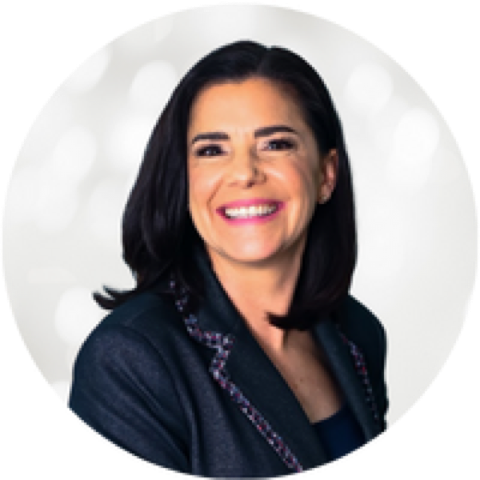
Tonia is a Doctor of Physical Therapy, Integrative Nutrition Health Coach, and Certified McKenzie Spine Specialist with over 25 years of experience helping clients heal from pain, injury, and chronic conditions. She specializes in spine care, orthopedic rehabilitation, and restoring strength and vitality through personalized, science-based treatment.

Meet Kimberly Macon, Professional Certified Coach (PCC), wife, mother, and a cancer survivor specialized in helping OneVillage members build mental resilience in the face of difficult situations and life changing events. Kimberly spent more than 15 years working in various roles across the Consumer Packaged Goods Industry within Marketing, Brand Management, Sales and Business Development.
What we work on
| Domain | What this pathway does |
|---|---|
| Nutrition & Metabolism | DASH or Mediterranean; sodium <2g/day; alcohol <=1 drink/day women, <=2 men. Dysphagia signs trigger speech-pathology referral. |
| Movement & Mobility | Coordinated with outpatient PT. Berg Balance baseline; balance work; fall-prevention focus. Cap intensity until cleared. |
| Sleep & Recovery | Apnea screen MANDATORY - sleep-disordered breathing dramatically raises secondary stroke risk. STOP-BANG + ESS at intake. |
| Stress & Resilience | Stress + BP linkage critical. Daily breathwork; tracked weekly. |
| Mind & Mood | Post-stroke depression in 33% of survivors. PHQ-9 q4 weeks. Treat aggressively - low PHQ-9 correlates with better functional recovery. |
| Preventive care | Annual lipid, A1c, BP, AFib screen. Carotid imaging per neuro recommendation. |
How progress is measured
These are the validated tools this pathway uses: at your first visit, at the mid-program review, and at the end.
| Tool | Cadence | Owned by |
|---|---|---|
| AHA Life's Essential 8 | Baseline, Wk 16-18, quarterly | WHC |
| Home BP series | Daily Build; biweekly maintenance | WHC + member |
| PHQ-9 | Every visit Wk 1-12; q4 weeks after | WHC; LCSW reads anything >=10 |
| STOP-BANG + ESS | Onboard - mandatory | Sleep Coach |
| Berg Balance Scale | Onboard, q4 weeks | Exercise Coach (PT-aligned) |
| Medication adherence audit | Wk 16-18 | RN Navigator |
The research behind this pathway
Your clinician playbook was built from the guidelines and studies below. They are listed so you can read them yourself: every one is a real, published paper and the number at the end of each line is its PubMed ID.
Guidelines this pathway follows
- 2021 Guideline for the Prevention of Stroke in Patients With Stroke and TIA · American Heart Association and American Stroke Association
The secondary-prevention targets this pathway works to. PMID 34024117
- Physical activity and exercise recommendations for stroke survivors · American Heart Association and American Stroke Association
How movement is progressed safely alongside outpatient physical therapy. PMID 24846875
- Life's Essential 8 · American Heart Association
The cardiovascular health score repeated at baseline, mid-program and exit. PMID 35766027
Key studies
- Kleindorfer DO et al. (2021). Stroke2021 Guideline for the Prevention of Stroke in Patients With Stroke and Transient Ischemic Attack: A Guideline From the American Heart Association/American Stroke Association
The AHA/ASA guideline for preventing a second stroke. It is the framework this pathway's targets come from. PMID 34024117
- Billinger SA et al. (2014). StrokePhysical activity and exercise recommendations for stroke survivors: a statement for healthcare professionals from the American Heart Association/American Stroke Association
The AHA/ASA statement on physical activity after stroke, including how to progress safely alongside outpatient physical therapy. PMID 24846875
- Hackett ML et al. (2014). Int J StrokePart I: frequency of depression after stroke: an updated systematic review and meta-analysis of observational studies
Pooled 61 studies and 25,488 people. Depression turned up in 31 percent of stroke survivors, and that figure had not improved since the previous review. PMID 25117911
- Seiler A et al. (2019). NeurologyPrevalence of sleep-disordered breathing after stroke and TIA: A meta-analysis
Pooled sleep studies done after stroke and TIA. Sleep-disordered breathing turned up in about seven in ten, which is why the apnea screen here is mandatory rather than optional. PMID 30635478
- Berg KO et al. (1992). Can J Public HealthMeasuring balance in the elderly: validation of an instrument
Validated the Berg Balance Scale in older adults and in stroke patients. It is the balance measure this pathway repeats. PMID 1468055
- Lloyd-Jones DM et al. (2022). CirculationLife's Essential 8: Updating and Enhancing the American Heart Association's Construct of Cardiovascular Health: A Presidential Advisory From the American Heart Association
Defines Life's Essential 8, the eight measures of cardiovascular health this pathway scores you on at baseline, mid-program and exit. PMID 35766027