

Who this is for
Adults 55+ with mobility, strength, or fall-prevention goals. Acute fracture / surgery routed to Trauma/Surgery Recovery first. Severe cognitive impairment routed to Alzheimer's Navigation with mobility support layered.
What brings people here
Age 55+; new MSK/arthritis dx; recent fall; mobility goals; FMA Movement domain elevated.
Clinical framework
OneVillage-developed (CDC STEADI fall-prevention aligned).
How the 8 weeks run
Baseline assessments, your first SMART goal, and the 1:1 that sets up everything after it.
Specialist coaches rotate in, and sessions come thickest here. One change at a time, in the domains your baseline flagged.
Re-score, refresh the care plan, and check in 1:1 on what is and is not working.
The remaining domains, at a lighter cadence, and the work of making the early weeks hold under pressure.
Final re-score, relapse prevention, and the plan for what happens next.
When your sessions fall
The program is built in four-week modules. Sessions come thickest at the start, when what you decide matters most, and step down as things settle. That is 5 sessions of 45 minutes across 8 weeks, counting the visit before week 1.
| Module | Weeks | Sessions | Cadence |
|---|---|---|---|
| Module 1 | Weeks 1 to 4 | 2 | every other week |
| Module 2 | Weeks 5 to 8 | 2 | every other week |
Week by week
- Before you beginBefore you begin
This is the reading before your first visit. This pathway has one outcome it is built around, and it is worth naming in the first paragraph: not falling. Strength is how we get there, and strength is worth having for its own sake, but falls are the thing we are trying to prevent.
- Week 1Falls are not bad luck
Falls are usually described afterward as accidents: a rug, a wet step, bad luck. The research does not read that way. Fall risk is a set of factors, most of them measurable and several of them changeable, and exercise is the single best-evidenced way to change them.
- Week 2Strength, balance and tai chi
This week you meet Tonia Burke, DPT, for 45 minutes. The purpose is a progression built for your joints, your medications and your current function: not a video, and not a general recommendation applied to you.
- Week 3Sarcopenia and protein
Balance training is what stops the stumble becoming a fall. Muscle is what balance training has to work with. This week is about the loss that happens quietly, and about the two things that slow it.
- Week 4Halfway: the re-score, and the medication review
This week you see Cindy again for 45 minutes and repeat every measure from week 0. Then you have the conversation that is easy to skip and is one of the highest-yield things in the pathway.
- Week 5Bones, and the supplements that did not deliver
Falls matter because of what they break. This week is about the other half of that equation, and it opens with the finding most likely to contradict something you are currently doing.
- Week 6Fear of falling
This week you meet Melissa Tuell, MOT, OTR/L, an occupational therapist, for 45 minutes. The subject is the one most likely to have been treated as a personality trait rather than as a clinical problem.
- Week 7The rest of the risk
Exercise is the largest single lever and it is not the only one. This week is the checklist that sits around it, taken from the frameworks this pathway is aligned with rather than from folklore.
- Week 8Making it hold
This is the last reading and the last 45 minutes with Cindy. Falls do not get prevented in eight weeks. They get prevented by what you are still doing in eight months, so week 8 is a handover rather than an ending.
Who you will work with
Your Whole Health Coach takes your first visit and closes every module, so it is the same person from the first session to the last. The specialists below lead the weeks where their work is the focus.

Professionally, Cindy has been a clinical nurse for nearly a decade. She served in both clinical and administrative capacities throughout her career and holds a Master's degree in Nursing Leadership. As a staff nurse, nurse leader, and quality improvement specialist, she led multidisciplinary teams in academic medical settings throughout Boston, New York, and Ohio to deliver high-quality care to patients across complex diagnoses.
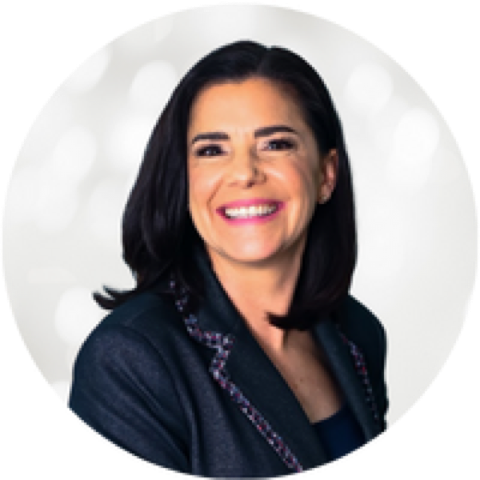
Tonia is a Doctor of Physical Therapy, Integrative Nutrition Health Coach, and Certified McKenzie Spine Specialist with over 25 years of experience helping clients heal from pain, injury, and chronic conditions. She specializes in spine care, orthopedic rehabilitation, and restoring strength and vitality through personalized, science-based treatment.

Melissa Tuell, MOT, OTR/L is a licensed Occupational Therapist with more than 30 years of experience helping people restore function, manage chronic conditions, and rebuild confidence in the activities that matter most to daily life.
What we work on
| Domain | What this pathway does |
|---|---|
| Nutrition & Metabolism | Protein 1.0-1.2 g/kg for sarcopenia. MIND diet. B12, vit D, calcium. Hydration. |
| Movement & Mobility | Strength 2-3x/wk + balance + flexibility. Impact loading if safe. Fall-prevention central. |
| Sleep & Recovery | Older-adult sleep changes; ISI tracked. Sleep meds reviewed with PCP. |
| Stress & Resilience | Identity, purpose, social engagement. Loneliness as risk factor. |
| Mind & Mood | PHQ-9 monthly. Cognitive screen (MoCA-self) optional baseline. |
| Preventive care | Annual physical, eye, dental, hearing, colonoscopy, mammogram, fall-risk assessment. |
How progress is measured
These are the validated tools this pathway uses: at your first visit, at the mid-program review, and at the end.
| Tool | Cadence | Owned by |
|---|---|---|
| TUG (Timed Up and Go) | Onboard, q4 weeks | Exercise Coach |
| 30s sit-to-stand | Onboard, q4 weeks | Exercise Coach |
| Berg Balance (if needed) | Onboard, q4 weeks | Exercise Coach |
| PHQ-9 | Onboard, monthly | WHC |
| ISI | Onboard, q4 weeks | Sleep Coach |
| MoCA-self (optional baseline) | Onboard | Brain Health Coach |
The research behind this pathway
Your clinician playbook was built from the guidelines and studies below. They are listed so you can read them yourself: every one is a real, published paper and the number at the end of each line is its PubMed ID.
Guidelines this pathway follows
- STEADI · Centers for Disease Control and Prevention
Screen, assess, intervene: the fall-prevention framework this pathway follows. PMID 23159993
- Exercise for preventing falls in older people · Cochrane review
The dose and type of exercise that actually prevents falls. PMID 30703272
Key studies
- Sherrington C et al. (2019). Cochrane Database Syst RevExercise for preventing falls in older people living in the community
Cochrane's review of 108 trials and 23,407 older people. Exercise reduced both the rate of falls and the number of people who fall, and the programs that worked were built on balance and functional training. PMID 30703272
- Liu CJ et al. (2009). Cochrane Database Syst RevProgressive resistance strength training for improving physical function in older adults
Cochrane's review of progressive resistance training in older adults: it improves strength and the physical tasks that strength is for, including getting out of a chair and walking. PMID 19588334
- Berg KO et al. (1992). Can J Public HealthMeasuring balance in the elderly: validation of an instrument
Validated the Berg Balance Scale in older adults and in stroke patients. It is the balance measure this pathway repeats. PMID 1468055
- Fried LP et al. (2001). J Gerontol A Biol Sci Med SciFrailty in older adults: evidence for a phenotype
Defined the frailty phenotype from 5,317 older adults, and gave this pathway a way to describe frailty as something specific rather than as a general sense of decline. PMID 11253156
- Stevens JA et al. (2013). Health Promot PractDevelopment of STEADI: a fall prevention resource for health care providers
Describes the CDC's STEADI approach to fall prevention: screen, assess and intervene. It is the framework this pathway's fall-risk work follows. PMID 23159993