

Who this is for
Adults with a diagnosed serious illness requiring coordination across 3+ specialties. Cancer-specific care routed to Cancer Navigation Pathway. Acute hospitalization stabilizes before pathway start. End-of-life care paired with palliative team.
What brings people here
Active critical illness requiring multi-specialty coordination (ALS, MS, advanced heart failure, post-transplant, post-cancer with complications); HR referral; PCP request.
Clinical framework
OneVillage-developed.
How the 8 weeks run
Baseline assessments, your first SMART goal, and the 1:1 that sets up everything after it.
Specialist coaches rotate in, and sessions come thickest here. One change at a time, in the domains your baseline flagged.
Re-score, refresh the care plan, and check in 1:1 on what is and is not working.
The remaining domains, at a lighter cadence, and the work of making the early weeks hold under pressure.
Final re-score, relapse prevention, and the plan for what happens next.
When your sessions fall
The program is built in four-week modules. Sessions come thickest at the start, when what you decide matters most, and step down as things settle. That is 5 sessions of 45 minutes across 8 weeks, counting the visit before week 1.
| Module | Weeks | Sessions | Cadence |
|---|---|---|---|
| Module 1 | Weeks 1 to 4 | 2 | every other week |
| Module 2 | Weeks 5 to 8 | 2 | every other week |
Week by week
- Before you beginBefore you begin
This pathway is for people living with a serious illness that requires more than one specialist: ALS, multiple sclerosis, advanced heart failure, life after a transplant, and other conditions where the care is spread across three or more teams that do not always talk to each other.
- Week 1Palliative care is not hospice
If you read one week of this program, read this one. Palliative care is specialist treatment of symptoms, distress and quality of life for people with serious illness. It runs alongside treatment aimed at the disease. It is available from the point of diagnosis.
- Week 2Movement inside a diagnosis
This week you meet Tonia Burke, DPT, MDT, for a 45-minute virtual physical therapy session. The purpose is a program built for your condition, your medications and your fatigue pattern, with an intensity ceiling set by your treating team rather than by a general fitness guideline.
- Week 3Symptoms, fatigue and sleep
Ask someone with a serious illness what has taken the most from them and the answer is rarely the diagnosis. It is fatigue, pain, breathlessness, nausea, or nights that do not restore anything.
- Week 4Mid-program: the coordination problem
Week 4 is your second 45-minute visit with Cindy and a repeat of the week 0 measures. It is also the week we deal with the structural problem underneath this whole pathway: care split across teams that each see one part of you, and a patient left to be the integration layer between them.
- Week 5The money, and the paperwork
This week has nothing to do with your body. It is about the bills, the denials, the leave paperwork and the slow financial damage that serious illness does, because that damage is measurable, it is common, and people are ashamed of it in a way that keeps them from asking for help until it is severe.
- Week 6Mood, meaning and the people around you
This week you meet Kimberly Macon, the Mindset Coach, for 45 minutes. The session covers coping, the conversations at home, and what people call meaning: the question of who you are now that the illness has taken over the calendar.
- Week 7Saying what you want
This week is about writing down what you would want if you became too unwell to say it, and about naming who should speak for you. It is not a prediction and it is not a step toward anything.
- Week 8Making it hold
Week 8 is your third 45-minute visit with Cindy and the last of the scheduled program. Serious illness does not run to an eight-week schedule, so this is a handover: you leave with the same measures completed a third time, and a written plan naming who you contact, for what, and how fast.
Who you will work with
Your Whole Health Coach takes your first visit and closes every module, so it is the same person from the first session to the last. The specialists below lead the weeks where their work is the focus.

Professionally, Cindy has been a clinical nurse for nearly a decade. She served in both clinical and administrative capacities throughout her career and holds a Master's degree in Nursing Leadership. As a staff nurse, nurse leader, and quality improvement specialist, she led multidisciplinary teams in academic medical settings throughout Boston, New York, and Ohio to deliver high-quality care to patients across complex diagnoses.
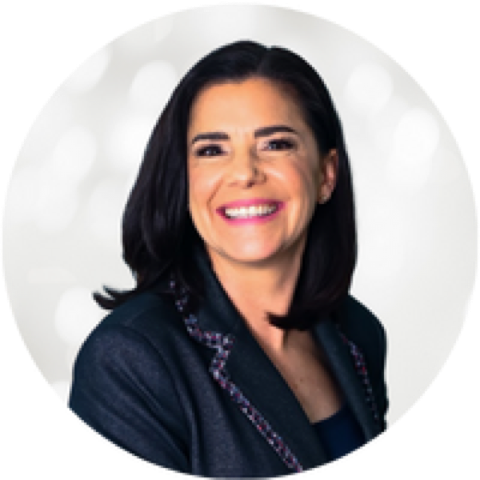
Tonia is a Doctor of Physical Therapy, Integrative Nutrition Health Coach, and Certified McKenzie Spine Specialist with over 25 years of experience helping clients heal from pain, injury, and chronic conditions. She specializes in spine care, orthopedic rehabilitation, and restoring strength and vitality through personalized, science-based treatment.
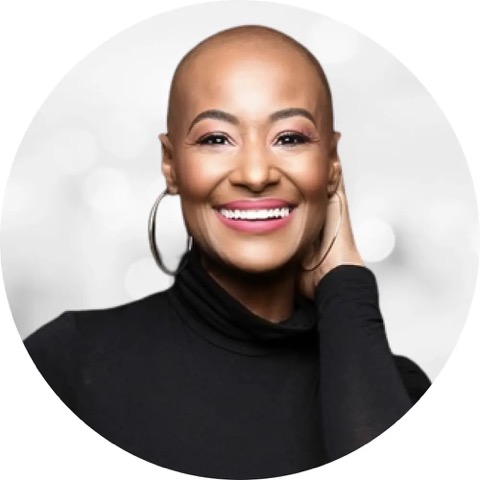
Meet Kimberly Macon, Professional Certified Coach (PCC), wife, mother, and a cancer survivor specialized in helping OneVillage members build mental resilience in the face of difficult situations and life changing events. Kimberly spent more than 15 years working in various roles across the Consumer Packaged Goods Industry within Marketing, Brand Management, Sales and Business Development.
What we work on
| Domain | What this pathway does |
|---|---|
| Nutrition & Metabolism | Condition-tolerant. Weight stabilization > weight loss during active disease. Anti-inflammatory pattern where evidence supports. |
| Movement & Mobility | Coordinated with PT. Fall prevention is core. Cap intensity per clinical team. |
| Sleep & Recovery | Disease-specific. Insomnia in 30-50%+ of members. CBT-I principles + medication reconciliation. |
| Stress & Resilience | Adjustment work; family communication; financial stress. |
| Mind & Mood | Depression/anxiety prevalence 2-3x baseline. PHQ-9 + GAD-7 monthly. |
| Preventive care | Standard preventive plus disease-specific surveillance per specialist team. |
How progress is measured
These are the validated tools this pathway uses: at your first visit, at the mid-program review, and at the end.
| Tool | Cadence | Owned by |
|---|---|---|
| CSC Distress Thermometer + problem list | Onboard, monthly | WHC + LCSW |
| PHQ-9 + GAD-7 | Monthly | LCSW reads |
| Symptom log (condition-specific) | Per visit / weekly | RN Nav |
| PAR-Q+ + 6-min walk | Onboard, q4 weeks | Exercise Coach |
| ISI | Onboard, q4 weeks | Sleep Coach |
| Weight + nutrition log | Weekly during Treat | Nutrition Coach |
The research behind this pathway
Your clinician playbook was built from the guidelines and studies below. They are listed so you can read them yourself: every one is a real, published paper and the number at the end of each line is its PubMed ID.
Guidelines this pathway follows
- Post-intensive care syndrome · Society of Critical Care Medicine stakeholders' conference
The definition that scopes what this pathway treats. PMID 21946660
- Post-intensive care syndrome-family · Society of Critical Care Medicine
Why the family is in scope and not only the patient. PMID 22080636
Key studies
- Needham DM et al. (2012). Crit Care MedImproving long-term outcomes after discharge from intensive care unit: report from a stakeholders' conference
The stakeholders' conference that named post-intensive care syndrome: the physical, cognitive and mental health problems that follow a stay in intensive care. PMID 21946660
- Davidson JE et al. (2012). Crit Care MedFamily response to critical illness: postintensive care syndrome-family
Named post-intensive care syndrome-family: the anxiety, acute stress, depression and grief that show up in the family, not the patient. It is why family is in scope here. PMID 22080636
- Jensen JF et al. (2015). Intensive Care MedImpact of follow-up consultations for ICU survivors on post-ICU syndrome: a systematic review and meta-analysis
Pooled five trials of routine follow-up consultations for ICU survivors. They roughly halved new post-traumatic stress at three to six months, but did not move quality of life or the other outcomes measured. Coordinated care is not the same as one appointment. PMID 25731633
- Kamdar BB et al. (2020). ThoraxReturn to work after critical illness: a systematic review and meta-analysis
Pooled 52 studies and 10,015 previously employed survivors of critical illness. About a third were back at work by three months and 60 percent by a year, and many who did return lost the job or had to change it. PMID 31704795
- Cullen KL et al. (2018). J Occup RehabilEffectiveness of Workplace Interventions in Return-to-Work for Musculoskeletal, Pain-Related and Mental Health Conditions: An Update of the Evidence and Messages for Practitioners
Reviewed what actually gets people back to work after illness or injury. Multi-domain programs that involve the workplace itself worked; health-care-only approaches did not. PMID 28224415